Robert Indiana kept a series of illustrated journals during the late 1950s and 1960s, in which he discusses the development of his work as well as his daily life on Coenties Slip.
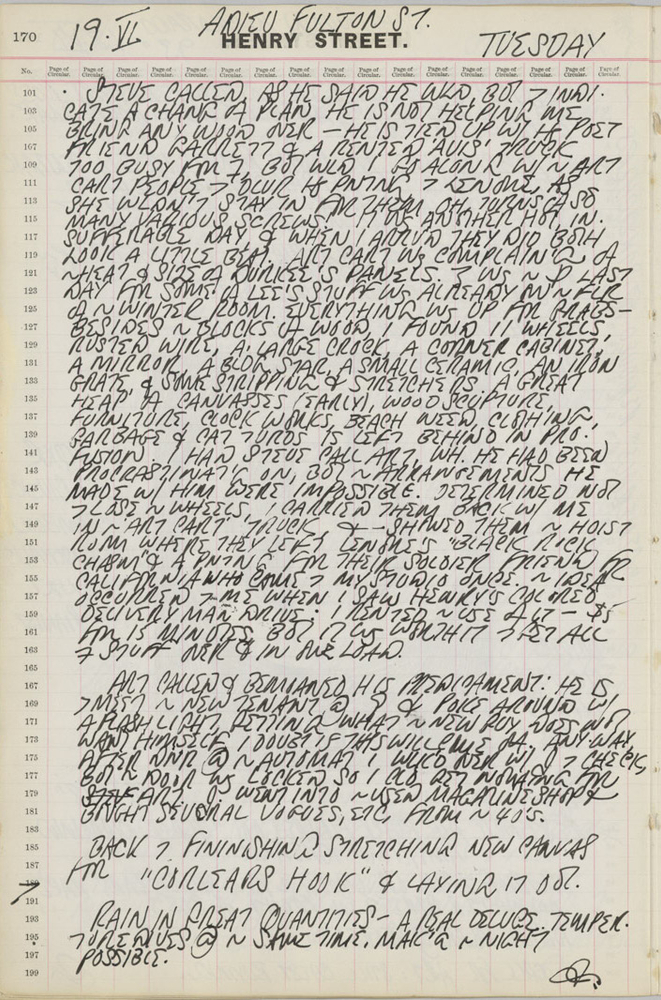
In his journal entry for June 19, 1962, Indiana records that Stephen Durkee, who was moving, called to tell him he would not be able to help him bring any of the wood over from his studio, and asked him to accompany the art transporters bringing his painting to Lenore Tawney's studio. Indiana writes: "everything was up for grabs [at Durkee's studio]—besides the blocks of wood, I found eleven wheels, rusted wire, a large crock, a corner cabinet, a mirror, a building star, a small ceramic, an iron grate, and some stripping and stretchers. A great heap of canvasses (early), wood sculpture, furniture, clock works . . ."
Indiana was "determined not [to] lose the wheels," so he carried them back with him in the transport truck. He notes then renting the use of a vehicle for fifteen minutes so that he could get more things over and in one load.
Indiana also records a call from Art (clinical psychologist and art collector Arthur Carr), and that he finished stretching the "Corlears Hook" panel of The Melville Triptych.